
 Posted by
 I want to be direct about this one: flood insurance is dramatically underpurchased relative to actual flood risk in the United States. Homeowners who assume their standard policy covers flood damage are making a costly and preventable mistake, and I see this happening all the time in conversations with friends and neighbors. The core problem is a widespread misunderstanding that I think stems from how we talk about “home insurance” in general.
Standard homeowners and renters insurance policies exclude flood damage entirely. Coverage requires a separate policy, most commonly through the National Flood Insurance Program. The NFIP currently provides nearly 1.3 trillion dollars in coverage to about 4.7 million policyholders nationwide, which sounds like a large number until you place it against the actual scale of flood exposure in this country.
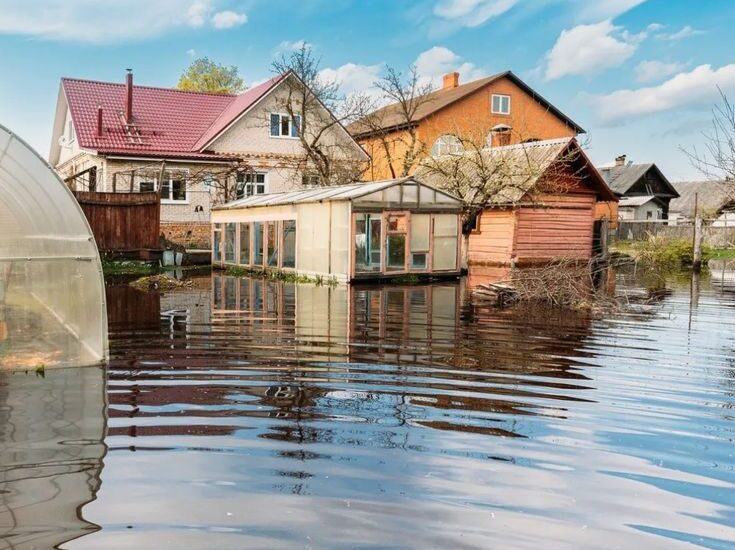
Millions of homes sit in mapped flood-risk zones without any flood coverage at all. What really gets me is that a significant share of flood damage occurs outside the officially designated high-risk zones. Flood maps are based on historical data and modeling that doesn’t always capture emerging risk from changing rainfall patterns and development. Think about that for a second.
Are you relying on a map that might already be outdated? According to FEMA and industry survey data, only a portion of homeowners who identify themselves as being at flood risk actually purchase coverage, and a meaningful share of those who do buy private coverage rather than an NFIP policy, which carries different terms and exclusions worth reviewing carefully.
I believe the underlying reason for this gap is a mix of cost sensitivity and a mistaken belief that federal disaster assistance will cover the loss instead. Federal disaster aid, when available at all, is typically a low-interest loan rather than a grant, and it requires a formal disaster declaration that doesn’t apply to every flooding event. Families relying on that assistance as a backstop are making a risky assumption that frequently does not hold up.
Flood insurance isn’t just for those who live near the coast or rivers, yet data shows 98% of U.S. counties have experienced a flood while less than 4% of U.S. households have an NFIP policy. My position is that flood insurance should be treated as close to mandatory for any household in or near a floodplain, regardless of whether a mortgage lender requires it.
Lenders only mandate NFIP coverage for homes with government-backed loans located in high-risk Special Flood Hazard Areas, which leaves out homes just outside those zones, homes owned outright without a mortgage, and homes in moderate-risk areas that still experience significant flood losses during major storms.
The absence of a legal requirement is not the same as the absence of real risk, and I think too many households use the lack of a mandate as an informal signal that the risk does not apply to them. Cost is a legitimate concern, and NFIP premiums have risen under the newer Risk Rating 2.0 methodology, which prices policies based on more individualized flood risk data.
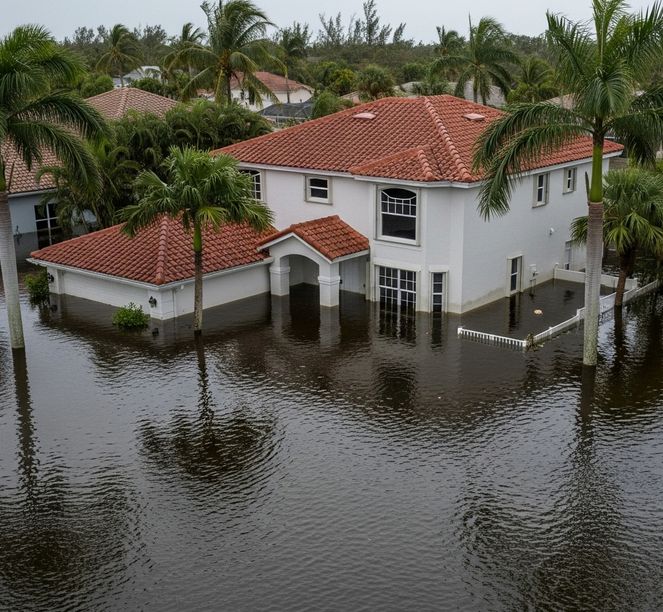
But the cost of a policy, even a rising one, remains small compared to the cost of an uninsured flood loss, which frequently runs into tens or hundreds of thousands of dollars in structural and personal property damage. I would rather see households treat flood insurance as a fixed cost of homeownership in any flood-exposed area than treat it as optional protection to be skipped when budgets tighten.
Just one inch of water can cause roughly $25,000 of damage to your property, and 40% of NFIP flood insurance claims come from outside high-risk flood zones. Let that sink in. Flood insurance coverage limits are another factor to consider. Homeowners can secure up to $250,000 for the building structure and up to $100,000 for contents, but those limits might not be enough for high-value homes.
Private flood insurance has grown significantly as an alternative to NFIP policies, offering higher coverage limits and broader protection, but it comes with its own tradeoffs like potential non-renewal. The NFIP runs on a 30-day waiting period before a policy becomes effective, so you cannot wait until a storm is named to buy coverage. I have seen people learn this lesson the hard way, and it is not a situation I would wish on anyone.
What does flood insurance actually exclude? People are often surprised that basements receive limited coverage; personal property like couches and TVs in basements are not covered, though items like furnaces and water heaters are. Flood insurance also doesn’t cover damage from mold you could have prevented, landscaping outside the structure like trees and fences, or vehicles comprehensive auto insurance covers those.
Understanding these gaps is essential before you need to file a claim. My advice? Do your homework now rather than when water is rising. Flooding is the most common and destructive natural disaster in the United States, with 90% of all natural disasters involving flooding, yet 70% of annual flood losses remain uninsured. The data suggests an average flood claim of about $44,000, while the average annual NFIP premium is around $700.
That math works out in your favor over the long run, and I think most people who skip coverage simply haven’t run those numbers. Another angle worth exploring is the Community Rating System, which offers premium discounts of up to 45% for communities that exceed minimum floodplain management standards. If your community participates, you could save significantly on your NFIP policy.
That is worth checking with your local floodplain administrator about. Also, if you live in a low-to-moderate risk area, you might qualify for a Preferred Risk Policy that combines structure and contents coverage into one affordable plan. These are the kinds of details that make flood insurance more accessible than people assume. I know the topic of insurance can feel dull or overwhelming, but protecting your home and financial future deserves a bit of attention.
Take a few minutes to check your property’s flood risk using FEMA’s Flood Map Service Center, and have a conversation with your insurance agent about what a policy would actually cost for your situation. The peace of mind from knowing you are covered against flood damage is worth the effort. And if you do decide to purchase, remember that policies typically have that 30-day waiting period, so do not delay until the clouds roll in. Your future self will thank you for taking this step today.
Reference
Federal Emergency Management Agency, Flood Insurance overview: https://www.fema.gov/flood-insurance
Insurance Information Institute, “Facts and Statistics: Flood Insurance”: https://www.iii.org/fact-statistic/facts-statistics-flood-insurance
Federal Emergency Management Agency, Risk Rating 2.0 and NFIP resources, via Association of State Floodplain Managers: https://www.floods.org/resource-center/nfip-national-flood-insurance-program/