
 Posted by
 A few years back, I slipped on a wet floor at a grocery store and fractured my wrist. It sounds minor, but I was out of work for six weeks, racking up medical bills I had not planned for, and scrambling to cover everyday expenses with one good hand and a very thin savings account. That experience was my introduction to a hard truth: most people do not think seriously about personal accident insurance until something goes wrong. And by then, of course, it is too late. Learn what personal accident insurance covers, who needs it most, and why this affordable policy could protect your income when an accident turns your life upside down.
Personal accident insurance is a type of coverage that pays out a benefit when you are injured, disabled, or killed as a result of an accident. Unlike health insurance, which covers the cost of medical treatment, personal accident insurance provides a lump sum or regular payments that you can use as you see fit, including lost wages, rehabilitation costs, and household expenses, whatever the situation demands. It is a financial cushion specifically designed to account for the unpredictability of accidents, which, by their very nature, are unforeseen.
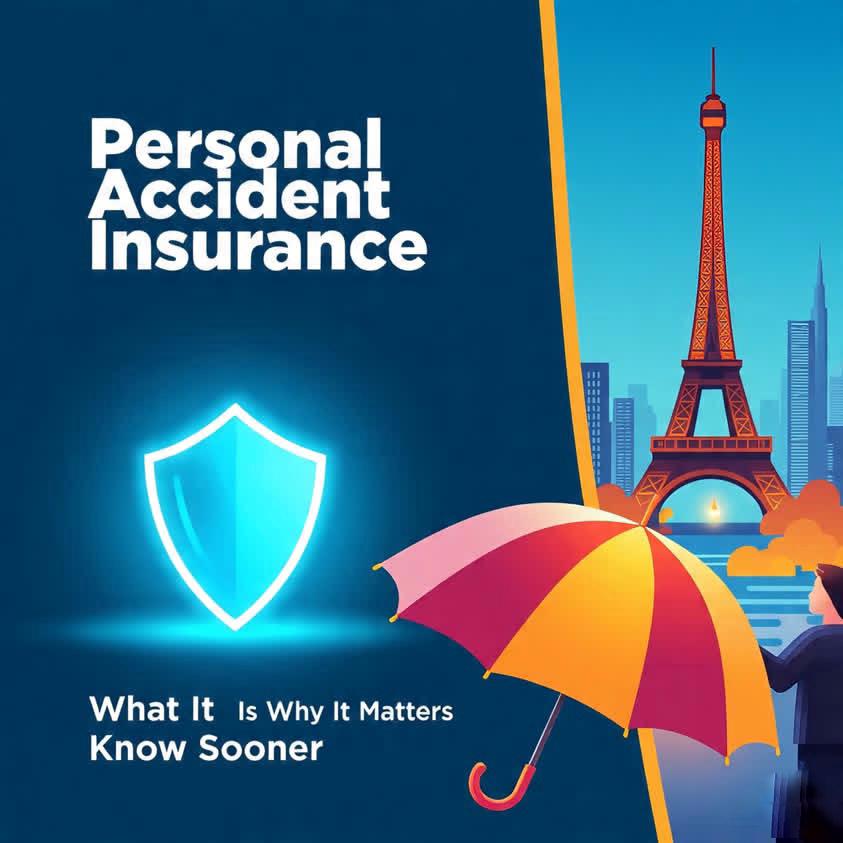
What makes personal accident insurance particularly valuable is its scope. Coverage typically includes accidental death benefits, permanent total disability, permanent partial disability, and temporary total disability. Some policies also cover medical expenses related to the accident, hospital cash allowances, and even ambulance costs. The specifics vary by insurer and policy, so it is worth reading the fine print carefully, but the core purpose is the same across the board: to protect your income and financial stability when an accident takes you out of the picture, temporarily or permanently.
I remember thinking, before my wrist incident, that accidents were things that happened to other people. People who worked dangerous jobs, maybe, or who were not careful enough. That kind of thinking is extremely common, and it is also extremely wrong. According to the National Safety Council, millions of Americans seek medical attention for unintentional injuries every single year. These are not just construction workers or extreme athletes; they are office employees, parents chasing toddlers, people walking down stairs in their own homes. Accidents are the leading cause of injury-related death in the United States, and they do not discriminate.

So who actually needs personal accident insurance? Honestly, almost everyone can benefit from it. But it is especially critical for self-employed individuals and freelancers who do not have access to employer-sponsored disability benefits. If you are your own boss and you cannot work, there is no HR department cutting you a check. Personal accident insurance fills that gap in a very real and immediate way. Families with a single primary earner are in a similarly vulnerable position; one accident can spend an entire household’s financial foundation without the right coverage in place.
The cost of personal accident insurance is another reason people tend to overlook it. Premiums are generally quite affordable compared to other types of insurance, often ranging from a few dollars to a few dozen dollars per month, depending on the level of coverage, the insurer, and your personal risk profile. For that relatively small outlay, you get meaningful protection against a potentially catastrophic financial event. When I finally purchased a personal accident policy after my wrist saga, I genuinely could not believe I had waited so long. The peace of mind alone felt worth it.
One thing worth understanding is how personal accident insurance interacts with other coverage you might already have. It does not replace health insurance; you still need that for medical treatment. It does not replace life insurance either, though many personal accident policies do include an accidental death benefit as a component. Think of it as a complementary layer of protection. Health insurance handles the hospital. Life insurance protects your family if you die. Personal accident insurance bridges the financial gap between the lost wages, the recovery period, and the expenses that pile up while you are physically unable to earn.
If you are shopping for a personal accident insurance policy, a few things are worth paying attention to. The definition of “accident” in your policy matters enormously; some insurers have narrow definitions that exclude certain types of injuries or circumstances. The waiting period before benefits kick in is another factor, as is the maximum benefit period for disability payments.
And of course, exclusions. Pre-existing conditions, self-inflicted injuries, and injuries sustained while under the influence are common exclusions that can affect whether a claim gets paid. Reading the policy document carefully, or working with a licensed insurance agent who can walk you through the details, goes a long way.
Reference
National Safety Council. (2023). Injury facts: Preventable deaths – Odds of dying (2023 data). https://injuryfacts.nsc.org/all-injuries/preventable-death-overview/odds-of-dying/
U.S. Bureau of Labor Statistics. (2023). Occupational injuries and illnesses: Industry data. U.S. Department of Labor. https://www.bls.gov/iif/
U.S. Centers for Disease Control and Prevention. (2023). Injury prevention and control: Data and statistics. National Center for Injury Prevention and Control. https://www.cdc.gov/injury/wisqars/index.html