

 Posted by
 Learn what surety bonds are, how they work, and why they matter for contractors, business owners, and legal proceedings. I did not know what a surety bond was until someone told me I needed one. I was helping a friend navigate a contractor licensing application, and the phrase kept appearing in every form, every checklist, and every government portal we clicked through.
We both stared at it the same way you stare at a legal document written in a language you almost speak. Eventually, I sat down and actually figured it out, and I have to say it is one of those financial instruments that makes a lot more sense once someone explains it plainly.
A surety bond is essentially a three-party agreement. You have the principal, which is the business or individual who needs the bond. You have the obligee, which is typically a government agency or client requiring the bond. And then you have the surety company, which is the insurer backing the whole thing.
The surety bond guarantees that the principal will fulfill certain obligations, whether that is completing a construction project, following licensing regulations, or handling client funds responsibly. If the principal fails to do so, the obligee can file a claim against the bond and receive financial compensation.
What makes surety bonds different from regular insurance is something people often get confused about. With standard insurance, you pay a premium, and the insurer absorbs the risk. With a surety bond, the principal is still ultimately responsible for any losses. The surety company steps in to pay a claim, but then they come back to the principal for reimbursement. A surety bond is less about protection and more about guaranteeing it signals to clients and regulators that a business is financially stable and legally committed to doing what it says it will do.
The types of surety bonds available are broader than most people realize. Contract surety bonds are probably the most well-known, and they are widely used in the construction industry. Performance bonds, payment bonds, and bid bonds all fall under this category. A performance bond guarantees that a contractor will complete a project according to the contract terms.
A payment bond ensures that subcontractors and suppliers get paid. A bid bond protects the project owner in case a winning bidder backs out before signing the contract. These are not just technicalities for anyone managing a large construction project; these bonds are what keep the whole thing from unraveling.
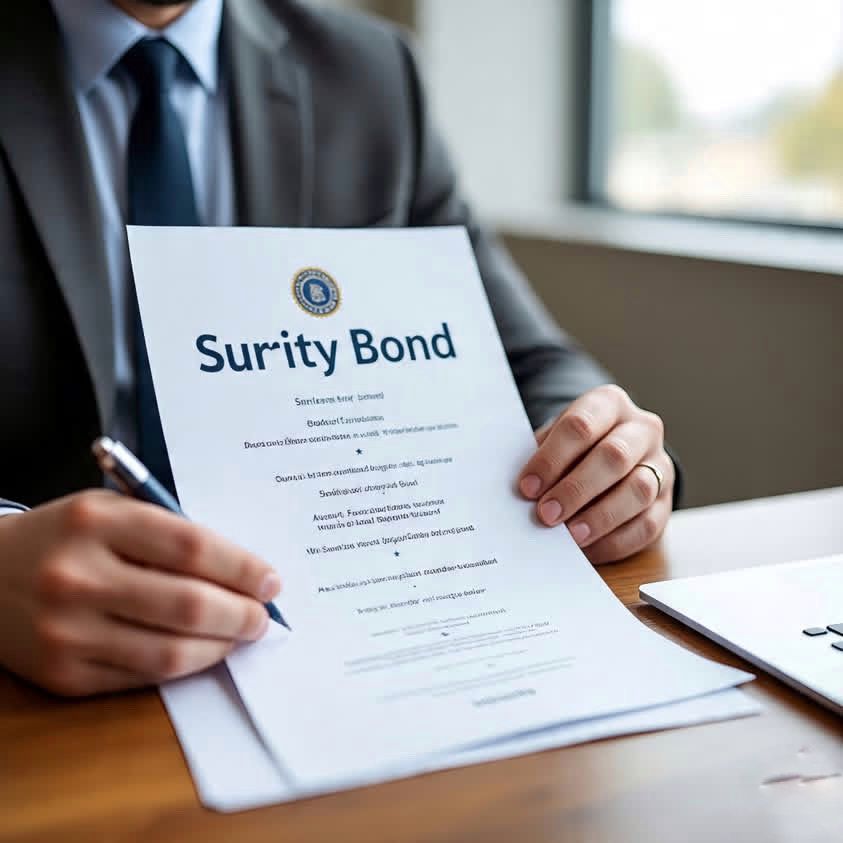
Then there are commercial surety bonds, which cover a much wider range of industries. License and permit bonds are probably the most common type here. A lot of states require businesses, such as auto dealers, mortgage brokers, freight brokers, collection agencies, and many others, to obtain a license and permit bond before they can legally operate.
The bond amount and requirements vary by state and by industry, but the underlying purpose is always the same: to protect consumers and ensure that businesses follow the rules. I find it reassuring, honestly. Knowing that a licensed contractor or financial professional had to obtain a surety bond before opening their doors adds a layer of accountability that a simple business registration just does not provide.
Court surety bonds are another category worth understanding, especially if you ever find yourself involved in legal proceedings. Judicial bonds like appeal bonds, attachment bonds, and injunction bonds are used in litigation. Fiduciary bonds, sometimes called probate bonds, are required of individuals managing estates or trusts, ensuring that executors, guardians, and administrators handle the assets appropriately.
I have known a few people who went through estate proceedings without fully understanding why they needed a fiduciary bond. It is not bureaucratic friction; it is a protection for the beneficiaries who are trusting someone else with their inheritance.
Getting a surety bond is not as complicated as it might seem, though the process does vary depending on the type and amount. Most surety bond companies will evaluate your credit history, financial statements, and business experience before issuing a bond. The premium you pay typically ranges from one to fifteen percent of the total bond amount reflects your risk profile.
Someone with strong credit and a solid business history is going to pay much less than someone with financial red flags. For small bond amounts, many companies offer instant online approval. For larger commercial or contract bonds, underwriting takes more time and documentation.
One thing I always tell people is that carrying a surety bond is not just a regulatory checkbox; it is a competitive advantage. In industries where clients are choosing between multiple contractors or service providers, being bonded signals professionalism and financial accountability. It tells a potential client that you have been vetted, that you stand behind your work, and that there is a legitimate financial backstop if something goes wrong.
Reference
Federal Acquisition Regulation Council. (2023). Subpart 28.1 — Bonds and other financial protections. U.S. General Services Administration. https://www.acquisition.gov/far/subpart-28.1
U.S. Congress. (1935). Miller Act, 40 U.S.C. §§ 3131–3134. https://uscode.house.gov/view.xhtml?req=granuleid:USC-prelim-title40-section3131&num=0&edition=prelim
National Association of Surety Bond Producers. (2021). Introduction to surety bonding. Surety Industry Online. https://www.suretybonds.org/