

 Posted by
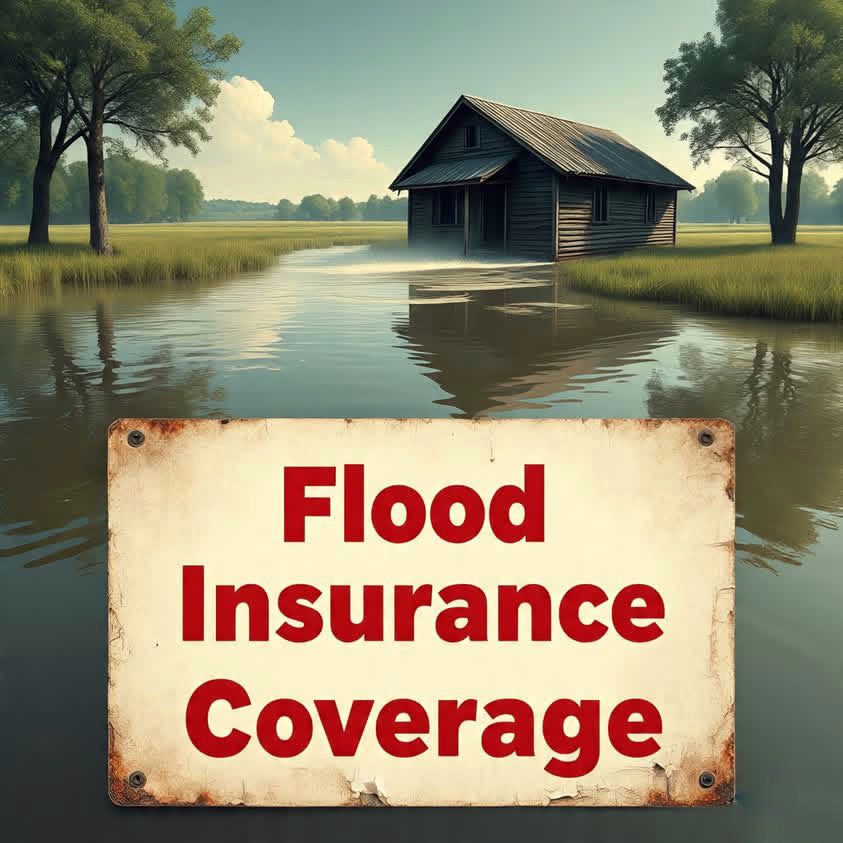
 Learn why flood insurance is essential for every homeowner, what the NFIP covers, and why waiting until a major disaster strikes could cost you everything. My uncle lost his home to flooding in 2016. Not a river flood, not a hurricane, just three days of relentless rain that overwhelmed the drainage system in his neighborhood. He had lived in that house for over twenty years and never once saw water come close to the front door. He had homeowners’ insurance.
He had kept up with every premium. And when the adjuster finally came out and walked through the ankle-deep mess that used to be his living room, the verdict was the same one that devastates thousands of Americans every single year: flood damage is not covered under a standard homeowners policy. Not a single dollar.
That experience changed the way I think about flood insurance entirely. It is easy to assume that because you have insurance, you are protected. Most people do not read the exclusions until it is too late, and flooding is one of the most common and costly exclusions buried in standard homeowners coverage. The truth is, flood insurance is a completely separate policy, and without it, you are absorbing all of that financial risk yourself. For a lot of families, that risk is enormous.
The most widely available source of flood insurance in the United States is the National Flood Insurance Program, commonly known as the NFIP. It is a federal program administered by FEMA, and it offers policies to homeowners, renters, and business owners through participating private insurers.
The NFIP provides two types of coverage: building property coverage, which protects the structure of your home up to 50,000, and personal contents coverage, which covers your belongings up to 00,000. These are purchased separately, which is something a lot of people do not realize until they file a claim and discover their belongings were never included in the policy they bought.

One of the most important things to understand about flood insurance, and one that genuinely surprises people, is the 30-day waiting period that applies to most NFIP policies. If you buy a policy today, it will not be active for another month. So if you live in a coastal area and a named storm is already making headlines, buying flood coverage at that point will do you absolutely no good for that event. The time to get covered is not when the forecast looks threatening. It is right now, on a calm and ordinary day, before any of that urgency exists.
Flood risk in the United States is also far more widespread than the official flood zone maps suggest. FEMA data consistently shows that a significant share of flood insurance claims come from properties located outside of designated high-risk flood zones. A lot of homeowners see that their property is not in a Special Flood Hazard Area and assume that means they are safe.
That assumption is increasingly dangerous. Changing rainfall patterns, aging stormwater infrastructure, rapid land development, and the broad effects of climate change are all pushing flood events into neighborhoods that historically had little to worry about. The definition of a so-called 100-year flood has become almost meaningless in certain parts of the country.
Flood insurance cost is another area where people tend to work from inaccurate assumptions. Many homeowners believe flood coverage is prohibitively expensive, especially if they are not in a high-risk zone. In reality, annual premiums for properties in moderate- or low-risk areas can be quite reasonable, sometimes just a few hundred dollars per year. Compare that to the average flood insurance claim, which frequently runs into the tens of thousands of dollars, and the value becomes obvious. The financial protection that flood coverage provides far outweighs what most people pay for it annually.
Beyond the NFIP, private flood insurance has expanded considerably as an option for homeowners who need higher coverage limits or more flexible terms. Private flood policies can sometimes offer better rates, faster claims processing, and coverage that exceeds the caps the NFIP imposes. If your home is worth significantly more than 50,000, or if your contents are particularly valuable, a private flood insurance policy may be worth exploring alongside or instead of an NFIP policy. A qualified insurance agent with experience in flood coverage can walk you through what each option actually covers and help you find the right fit.
What strikes me most about flood insurance, looking back at everything my uncle went through, is how preventable the financial devastation was. The flood itself was not preventable. The rain was going to fall regardless. But the part where he spent years rebuilding without any insurance payout, that part did not have to happen. Flood damage to homes and personal property is one of the most financially destructive events a family can face, and it is one of the most straightforward risks to transfer through a relatively affordable policy.
If you have been putting off looking into flood insurance because you think you are in a safe area, or because you assume your homeowners policy has you covered, I would encourage you to revisit both of those assumptions today. Check your current policy exclusions. Look up your property on the FEMA flood map. And then call an insurance professional and have an honest conversation about your actual exposure. The cost of being wrong about flood coverage is simply too high to leave to chance.
Reference
Federal Emergency Management Agency. (2022). National Flood Insurance Program: Flood insurance claims and policy data. U.S. Department of Homeland Security. https://www.fema.gov/flood-insurance
Federal Emergency Management Agency. (2021). Flood map service center: Understanding flood zones and maps. U.S. Department of Homeland Security. https://msc.fema.gov
Kunreuther, H., & Pauly, M. (2006). Rules rather than discretion: Lessons from Hurricane Katrina. Journal of Risk and Uncertainty, 33(1–2), 101–116. https://doi.org/10.1007/s11166-006-0luther