
 Posted by
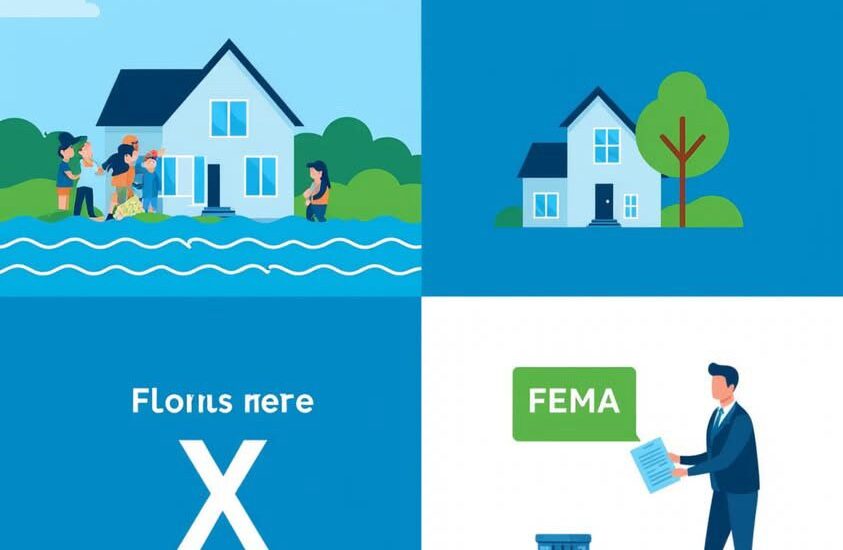
 Learn what flood zone insurance covers, how flood risk zones work, and why a separate flood policy is essential for protecting your home and finances. My neighbor, who had lived on our street for decades, came over and said something I will never forget. He told me that he had skipped flood zone insurance for years because he thought his homeowner’s policy had he covered. It did not. And after a flooding event that ruined his basement and most of his ground floor, he learned that lesson the hard way. I thought about that conversation for a long time afterward, and it eventually pushed me to get serious about understanding flood insurance and what it actually covers.
Flood zone insurance, often referred to as flood insurance or national flood insurance, is a separate policy from your standard homeowner’s insurance. Most people do not realize this until it is too late. A traditional homeowner’s policy will cover fire, wind damage, and theft, but it will almost never cover damage caused by flooding. That gap in coverage is exactly why the National Flood Insurance Program (NFIP), administered by FEMA, was created. If you live in a designated flood zone or even in a moderate-risk area, having a flood insurance policy could be the single most important financial decision you make as a homeowner.
So how do you know if you need it? The FEMA flood map, also called the Flood Insurance Rate Map (FIRM), divides land into different flood zones based on risk level. High-risk zones, labeled with letters like A or V, are areas where flood insurance is typically required if you have a federally backed mortgage. But here is the thing that surprises most people: roughly 25 percent of all flood insurance claims come from properties located outside of high-risk flood zones. Flooding does not follow neat boundaries on a map, and climate change is making flood risk more unpredictable every year. Moderate-risk zones, labeled Zone B, C, or X, can still experience significant flooding, and the premiums for those areas tend to be lower, which makes purchasing a policy a relatively easy decision.
When I finally sat down with my insurance agent to talk through flood zone coverage options, I was struck by how many variables went into calculating my premium. The elevation of my home relative to the base flood elevation, the type of foundation, the age of the building, and the amount of coverage I wanted all played a role. For most residential properties, NFIP policies cover up to $250,000 for building coverage and $100,000 for contents coverage. Private flood insurance options have expanded in recent years and can sometimes offer higher limits or broader coverage terms, which is worth exploring if your property value exceeds those NFIP caps.
One thing I wish someone had told me earlier is that flood insurance policies typically come with a 30-day waiting period before they take effect. You cannot purchase a policy on Monday because a storm is forecast for Thursday and expect to be covered. Planning ahead is essential, and waiting until you see flood warnings rolling across your television screen is already too late. I made the mistake of putting off the decision for months after that conversation with my neighbor, and I genuinely got lucky that nothing happened in the meantime. That kind of luck runs out eventually.
The claims process for flood damage is also worth understanding in advance. After a flood event, you will need to document everything thoroughly. Photographs, receipts, serial numbers on appliances, and a detailed inventory of damaged possessions all matter when it comes time to file. FEMA and private flood insurers send adjusters to assess the damage, but the burden of documentation falls significantly on the homeowner. I have talked to people who lost thousands of dollars simply because they could not provide adequate proof of what was damaged or what it was worth. Getting organized before a disaster happens is not pessimism, it is just practical.
Flood zone insurance rates have been in flux in recent years, partly due to FEMA’s Risk Rating 2.0 initiative, which updated how premiums are calculated to more accurately reflect individual property risk rather than just geographic zone placement. Some homeowners saw their rates decrease under the new system, while others experienced significant increases. If you have not reviewed your flood insurance policy recently, now is a good time to do that. Speaking with an independent insurance agent who specializes in flood coverage can help you compare NFIP options with private flood insurance alternatives and make sure you are getting the most appropriate coverage for your specific situation.
Living in a flood-prone area or even just a region that gets heavy seasonal rain means accepting a certain level of risk. But accepting risk does not mean being unprepared for it. Flood zone insurance exists precisely to protect people from the kind of catastrophic financial loss that can follow a serious flooding event.
My neighbor rebuilt, eventually. But it took years and cost far more than a flood insurance premium ever would have. That is the kind of math that tends to change how you think about coverage. Understanding your flood risk, knowing your flood zone designation, and securing the right policy are not complicated steps, but they do require taking the time to actually do them.
Learn what flood zone insurance covers, how flood risk zones work, and why a separate flood policy is essential for protecting your home and finances.
Reference
Federal Emergency Management Agency. (2023). National Flood Insurance Program: Flood insurance basics. U.S. Department of Homeland Security. https://www.fema.gov/flood-insurance
Federal Emergency Management Agency. (2022). Risk Rating 2.0: Equity in action. U.S. Department of Homeland Security. https://www.fema.gov/flood-insurance/work-with-nfip/risk-rating
Federal Emergency Management Agency. (2023). Flood Map Service Center. U.S. Department of Homeland Security. https://msc.fema.gov/portal/home