
 Posted by
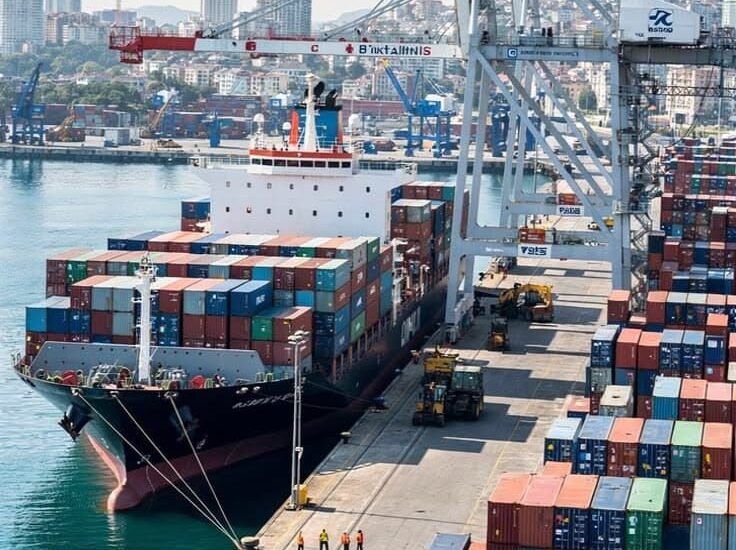
 I have to admit, when I first heard the term “inland marine insurance,” my mind immediately went to shipping containers, big cargo ships, and maybe a salty sea captain or two. It just sounds like something meant for ports and freighters. But honestly, that name is probably one of the most misleading things in the entire commercial insurance world, and I think that confusion is costing business owners real money.
I have come to believe that pretty much any business that transports goods, uses mobile equipment, or stores property off-site needs to understand this coverage, because the standard commercial property insurance you are probably relying on simply does not fill that gap. The name itself is what trips most people up. Despite sounding like it applies only to maritime industries, inland marine insurance actually covers a surprising range of everyday business exposures.
We are talking about the products, materials, and equipment you move over land, whether that is by truck, train, or even just in your own work van, or while they are temporarily stored at a third-party warehouse. This clearly distinguishes it from ocean marine insurance, which is specifically for goods transported over water. But the real value here is that inland marine coverage protects your assets wherever they happen to be, not just at your primary business address, and it is essential for any business with equipment that travels.
I think the most important thing for any business owner to grasp is exactly what that standard property policy does not do. Commercial property insurance is pretty static. It is designed to cover your stuff at the specific location listed on the policy. Inland marine insurance protects against property damage and theft outside of the fixed place of business. That single distinction explains why so many businesses end up underinsured. It is a massive gap that too many people simply do not see coming until it is too late. Reviewing your policy specifically for inland marine exclusions should be a standard part of any annual insurance review.
The real beauty of this product is what the industry calls a “floater” policy, meaning the coverage follows your property without regard to its specific location at any given moment, which is exactly the kind of flexibility that fixed-location property policies cannot offer. I remember talking to a contractor friend of mine who lost about fifteen thousand dollars’ worth of power tools when his locked trailer was stolen from a hotel parking lot overnight.
He assumed his commercial auto policy would handle it, but that only covered the trailer itself, not the contents. His property policy did not apply because the theft happened away from his shop. He ended up eating that loss entirely, and I cannot help but wonder how different that conversation would have been if he had simply added an inland marine floater to his package.
Who really needs this kind of protection? Well, if your business owns tools that travel to different job sites, ships products to customers, stores inventory at multiple locations, or relies on specialized equipment that moves regularly, you are exposed without this coverage. I think too many small business owners just assume their general liability or property policy has them covered, and that assumption can be absolutely devastating after a loss.

The scope of what qualifies for this coverage is actually broader than most people expect. It includes property in transit over land, movable property that may not stay at a fixed site, instrumentalities of transportation like bridges and piers, and even legal liability exposures of bailees. I appreciate how flexible this makes the coverage. For example, think about a landscaping company.
They might assume their mowers and trimmers are covered under a general policy, only to discover after a theft that the tools left at a job site were never actually protected. Or consider a professional photographer who takes tens of thousands of dollars’ worth of camera gear to a hotel for a shoot. If a pipe bursts and damages everything, a standard business policy would not pay a dime. Inland marine coverage, however, is designed for exactly that scenario.
It commonly covers property that belongs to others while it is in your care, custody, or control, a critical need for any business that does repair work. Now, let me be honest about the cost side of things. I have found that many business owners shy away from inland marine coverage because they assume it is expensive or complicated to add. In my experience, the premium is often surprisingly reasonable compared to the potential loss you are guarding against.
We are usually talking about a few hundred dollars a year for a policy that could save you tens of thousands in a single incident. That is a trade-off I am willing to make every single time. The real challenge is not the price; it is figuring out the right coverage limit. I always advise people to take a hard look at the replacement cost of every piece of equipment and inventory that leaves their premises, not just the depreciated value. Underinsuring here is a classic false economy, and I have seen it backfire more times than I care to count.
For related coverage considerations, see our discussion of cyber insurance and how modern risks continue to reshape traditional commercial policies. Ultimately, inland marine insurance is not an optional add-on. It is a core component of a modern risk management program for any business whose assets are not permanently nailed to the floor.
I would go so far as to say that if you have ever loaded a truck, carried a laptop to a client meeting, or stored inventory in a rented storage unit, you need to have a serious conversation with your agent about this coverage. Do not wait until after a loss to find out you were never protected. That is a lesson I have learned the hard way far too many times, and I really hope you do not have to learn it that way yourself.
References
International Risk Management Institute. (n.d.). Inland marine coverage (IM). https://www.irmi.com/term/insurance-definitions/inland-marine-coverage
Insurance Information Institute. (n.d.). Understanding inland marine insurance. https://www.iii.org/article/understanding-inland-marine-insurance
Insureon. (2026, May 13). Inland marine insurance. https://www.insureon.com/insurance-glossary/inland-marine-insurance