
 Posted by
 Learn how credit insurance protects your business from unpaid invoices and reduces accounts receivable risk. I learned about credit insurance the hard way. A few years back, I was helping a small business owner I knew navigate what looked like a promising stretch of growth. She had expanded her client base, extended payment terms to attract bigger accounts, and everything seemed to be on track.
Then one of her largest clients filed for insolvency without warning. The unpaid invoices stacked up fast, and what should have been a strong quarter turned into a financial emergency. That experience stuck with me, and it made me want to understand what tools actually exist to protect businesses from that kind of exposure. Credit insurance turned out to be one of the most practical answers I found.
At its core, credit insurance, sometimes called trade credit insurance or accounts receivable insurance, is a policy that protects businesses when their customers fail to pay. It is designed for companies that sell goods or services on credit, which, when you think about it, describes most businesses operating today. The policy steps in when a buyer defaults due to insolvency or, in some cases, when payment is simply delayed beyond a set threshold. What makes credit insurance genuinely useful is that it does not just pay out after the damage is done. Many insurers also offer ongoing credit risk assessment, which helps policyholders make smarter decisions about who they extend credit to in the first place.
The mechanics of a credit insurance policy are worth understanding before you decide if it fits your situation. A business pays a premium, typically calculated as a percentage of annual insured turnover, and in return, the insurer agrees to cover a portion of the outstanding debt, usually between 75 and 95 percent, if a covered buyer fails to pay. The policy will usually specify a credit limit for each buyer, and the insurer monitors those buyers continuously. That ongoing monitoring is actually one of the underappreciated benefits of trade credit insurance. Rather than relying on your own team to track the financial health of dozens or hundreds of customers, you essentially get that intelligence built into the product.
Does every business actually need credit insurance? That depends on a few things. Businesses that sell to a concentrated group of large buyers tend to carry a lot of concentrated risk. If one or two accounts represent thirty, forty, or fifty percent of your revenue, the sudden default of even a single buyer could be devastating. Credit insurance provides a meaningful buffer in that scenario. On the other end of the spectrum, businesses with highly diversified customer bases and smaller average invoice values might find the cost-benefit calculation less compelling. But even then, I would argue that the risk management intelligence alone has real value, especially when you are entering new markets or selling to buyers in unfamiliar industries.
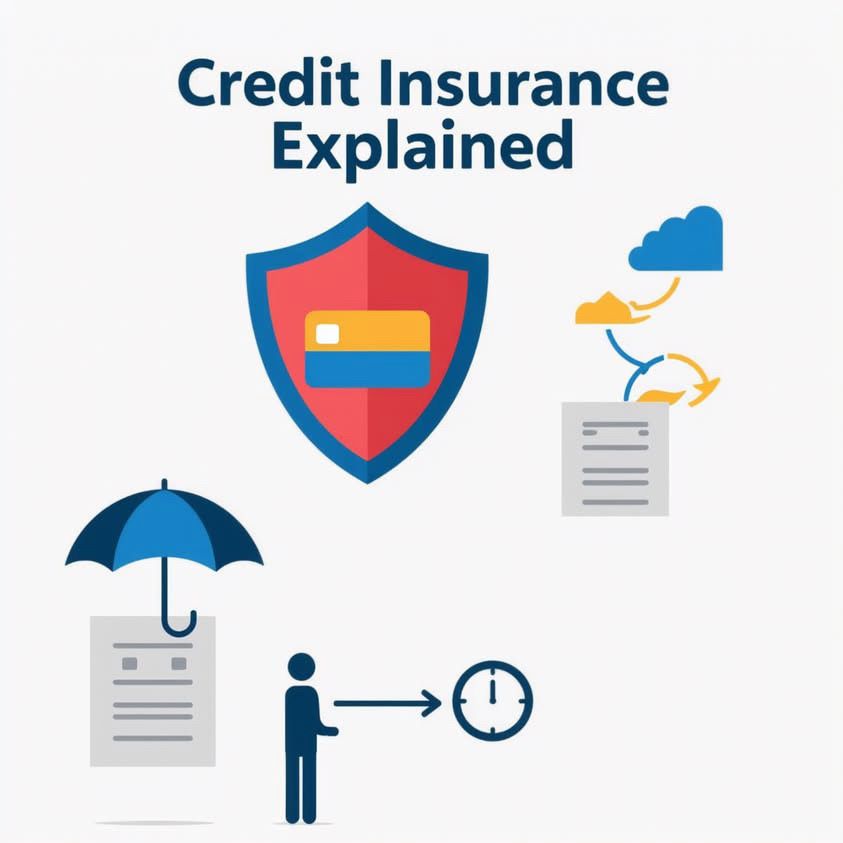
One thing I find interesting about trade credit insurance is how it intersects with financing. Banks and lenders often look more favorably on insured receivables when a business is seeking working capital or invoice financing. In some cases, having credit insurance in place actually improves a company’s borrowing terms or increases the amount of credit available to them. The insured receivables are seen as a more reliable asset because the risk of non-payment has been substantially reduced. For growing businesses that rely on access to credit to fund operations, that secondary benefit can be just as valuable as the protection itself.
The pricing of credit insurance varies considerably depending on the industry, the profile of buyers being covered, the geographic markets involved, and the overall claims history of the policyholder. Export credit insurance, for instance, covers international receivables and tends to account for additional risks like political instability, currency restrictions, or changes in government policy that could prevent payment. Domestic credit insurance focuses on buyers within the same country and generally carries a different risk profile. Some businesses carry both, particularly if they operate across borders and want comprehensive accounts receivable protection across their full customer base.
I think one reason credit insurance remains underutilized in some sectors is that it sounds more complicated than it actually is once you sit down and look at it carefully. The concept is straightforward: you have extended credit to customers, and there is a real possibility that some of them will not pay. A credit insurance policy transfers a meaningful portion of that risk to an insurer in exchange for a relatively modest premium. The claims process, when it comes to that, typically involves notifying the insurer of a default within a defined period and providing documentation of the outstanding debt. From there, the insurer reviews the claim and pays out according to the terms of the policy.
Reference
Export-Import Bank of the United States. (2023). Export credit insurance. U.S. Government. https://www.exim.gov/solutions/export-credit-insurance
U.S. International Trade Administration. (2024). Export credit insurance. U.S. Department of Commerce. https://www.trade.gov/export-credit-insurance
Export-Import Bank of the United States. (2023). Multi-buyer small business insurance. U.S. Government. https://www.exim.gov/solutions/export-credit-insurance/small-business-policy